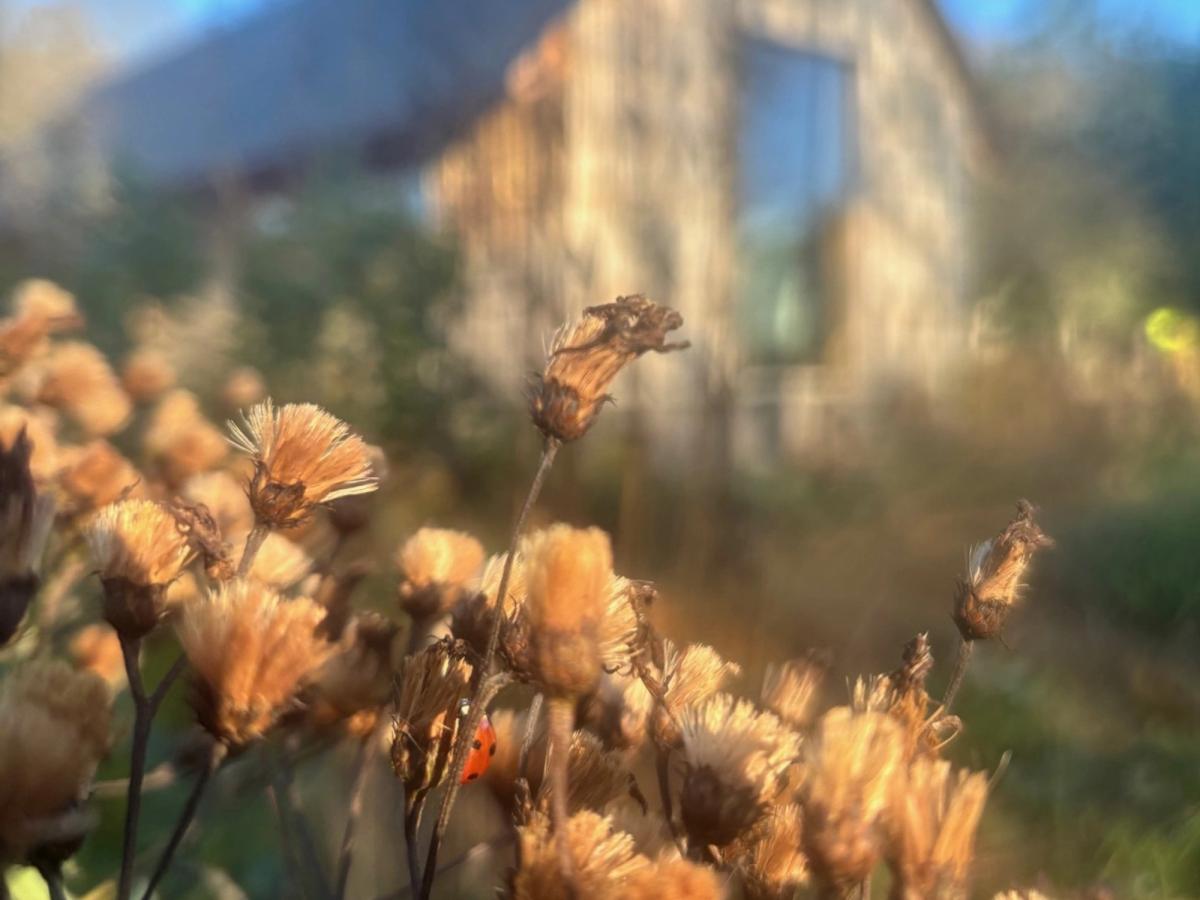
Winter announces itself not with drama, but with withdrawal. Growth slows, colour drains from the land, and motion becomes rare enough that we mistake stillness for absence. Yet the silence of winter is not emptiness. It is a biological pause, a season shaped by endurance, and preparation, in which life contracts rather than disappears.
Much of winter ecology unfolds beyond ordinary perception. Within gardens, orchards, and field margins, standing dead stems, hollow grasses, and dried seed heads become refuges of disproportionate importance. Solitary bees and wasps persist as larvae sealed within plant stems, their development suspended until warmth returns. Beetles, and ladybirds occupy dry cavities, while moths pass the season as pupae at the base of plants or beneath leaf litter. These structures moderate extremes of temperature and moisture, forming stable microclimates that permit survival through frost and prolonged cold.
Seedheads, frequently removed in the pursuit of tidiness, are among the most valuable winter resources. They function simultaneously as shelter and sustenance: harbouring insects while providing seed for birds such as finches and sparrows during a season of scarcity. By leaving seed heads intact, entire food chains are maintained. The insects that emerge in spring, pollinators and predators alike, owe their presence to decisions made months earlier, when restraint prevailed over intervention.
Many of the most significant winter inhabitants remain invisible. Solitary bees and wasps sealed within stems or seed heads do not announce themselves, yet their survival determines the reproductive success of plants and the regulation of insect populations in the seasons to come. The premature removal of stems eliminates these future agents before they are ever seen.
Beyond vegetation, human structures also assume ecological roles. Sheds, barns and buildings such as the Apple House offer stable, sheltered environments that are otherwise rare in winter landscapes. For bats, these spaces provide the conditions necessary for hibernation, a state of metabolic reduction that allows survival when insects are absent. Disturbance during this period carries high energetic costs, often exceeding what individuals can recover before spring.
Winter therefore teaches a counterintuitive lesson: that in ecological terms, inaction can be a form of care. Delaying cutting, avoiding unnecessary clearance, and retaining plant material on site rank among the most effective conservation measures available. Where intervention is unavoidable, cut stems left bundled and upright continue to serve as habitat rather than refuse.
As daylight lengthens, this hidden community will re-emerge. Insects will resume movement, birds will find voice, and plants will respond to subtle shifts in light and temperature. Spring does not arrive suddenly; it is assembled quietly within the architecture of winter. By respecting its silence, we allow life the time it requires to endure and to return in full.